Budapest is one of the easiest capitals in Europe to enjoy without a car. Trains from Vienna arrive in the city centre almost every hour, the airport bus drops you in the middle of Pest, and once you are there, trams, the metro and your own feet will take you to every sight in this guide.
The city itself is younger than it looks. Buda and Óbuda on the hilly west bank of the Danube and Pest on the flat east bank were joined into one city in 1873. Today Budapest has about 1.7 million inhabitants and is by far the largest city in Hungary, but the historic core along the river is compact enough to cross on foot in an afternoon.
From Vienna. Railjet and EuroCity trains run from Wien Hauptbahnhof to Budapest roughly every hour. Most arrive at Budapest-Keleti, a grand 19th-century station on metro lines M2 and M4, in about 2 hours 40 to 2 hours 55 minutes. The private operator RegioJet runs several trains a day to Budapest-Déli on the Buda side. Seats on international Railjets are best booked in advance, when the cheapest fares are available.
From Zagreb. One direct InterCity a day links Zagreb Glavni kolodvor with Budapest-Déli. In the 2026 timetable it takes just under six hours and arrives in Budapest in the late evening, so it suits a slow travel day with a book and the Hungarian countryside rolling past the window.
From Ljubljana. There is no fast year-round rail link. The usual car-free options are the train to Zagreb followed by the InterCity to Budapest, the train via Vienna, or a long-distance coach.
From the airport. Bus 100E Airport Express runs around the clock between Liszt Ferenc International Airport and Deák Ferenc tér, with stops at Kálvin tér and Astoria. The trip takes about 40 minutes. It needs a special airport ticket (2,500 HUF in 2026), which you can buy by simply tapping a contactless bank card on the reader next to the driver.
Getting around
The public transport company BKK runs the metro, trams, buses and the HÉV suburban trains. A 24-hour travelcard costs 2,750 HUF and a 72-hour card 5,750 HUF (2026 prices), which pays off quickly if you ride more than a few times a day. Note that travelcards are not valid on the 100E airport bus.
Three rides are worth taking for their own sake:
Metro line M1. Opened in 1896, it was the first underground railway on the European mainland. Its small yellow trains run from Vörösmarty tér under Andrássy Avenue to City Park and beyond, and the tiled stations are part of a UNESCO World Heritage site.
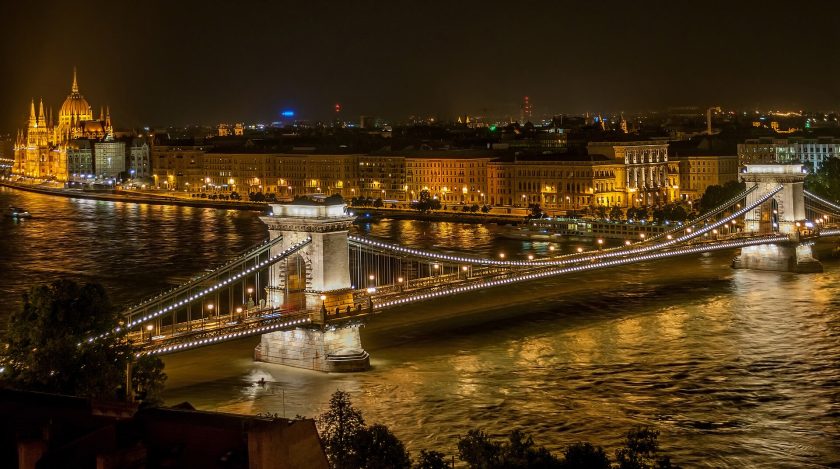
Tram 2. It runs along the Pest bank of the Danube, past the Parliament and below the Chain Bridge, with Buda Castle across the water.
The Castle Hill Funicular (Budavári Sikló). Running since 1870, it lifts you from Clark Ádám tér at the end of the Chain Bridge to the Castle District in about a minute. Walking up the paths next to it takes ten to fifteen minutes and is free.
Buda: castles, churches and the best views
The Castle District sits on a long limestone ridge above the river. Buda Castle, the former royal palace, was rebuilt several times over the centuries and now houses the Hungarian National Gallery and the Budapest History Museum. A few minutes north, Matthias Church with its patterned tile roof stands next to Fisherman’s Bastion, a fairy-tale terrace of white towers built at the turn of the 20th century. Come early in the morning or after sunset, when the terraces are quiet and the view across to the Parliament is at its best.
South of the castle rises Gellért Hill. The climb to the Citadella at the top takes about half an hour and rewards you with the classic panorama of all the Danube bridges. Please note that the famous Gellért Thermal Bath at the foot of the hill closed on 1 October 2025 for a full renovation, and its operator plans to reopen it in 2028.
Buda Castle, home of the Hungarian National Gallery
Pest: Parliament, avenues and markets
Most of the city’s life happens on the Pest side. The neo-Gothic Hungarian Parliament Building, completed in 1904, is the largest building in the country, and guided tours take you inside to the Holy Crown. A short walk south along the embankment brings you to the Shoes on the Danube Bank, a quiet memorial to the Jews who were shot here in 1944 and 1945.
The Széchenyi Chain Bridge, opened in 1849 as the first permanent bridge between Buda and Pest, was renovated and reopened in 2023, and it is now a pleasant crossing on foot. On the Pest end, follow the streets inland to St Stephen’s Basilica, whose dome has a viewing terrace, and then stroll up Andrássy Avenue past the Hungarian State Opera to Heroes’ Square and City Park.
For food, the Great Market Hall at Fővám tér has paprika, sausages and pastries on the ground floor and simple lunch counters upstairs. In the evening, the old Jewish Quarter in District VII is the place for small bars and restaurants. If you like shopping more than sightseeing, see our guide to Budapest shopping.
Thermal baths
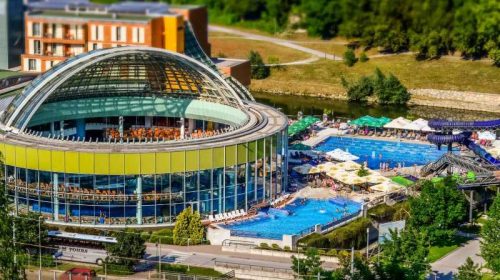
Budapest sits on more than a hundred thermal springs, and bathing is part of everyday life. With Gellért closed, the obvious choice is the Széchenyi Thermal Bath in City Park, a huge yellow neo-baroque complex with outdoor pools that steam even in winter. It is open every day, from 7:00 on weekdays and 8:00 at weekends; on the M1 metro, get off at Széchenyi fürdő. Smaller and calmer alternatives include the Rudas Bath, with its Ottoman-era dome at the Buda end of Elisabeth Bridge, and the Lukács Bath, popular with locals. Opening hours change around holidays, so check the bath’s own website before you go.
Food and wine
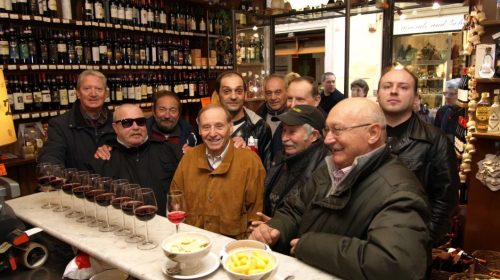
Hungarian cooking is generous: goulash soup, chicken paprikash, lángos (fried dough with sour cream and cheese) and the layered Dobos cake. Hungarian wine deserves a tasting too. Tokaj in the north-east of the country, famous for its sweet Aszú wines, is a UNESCO World Heritage cultural landscape, and you will find wines from Villány, Eger and Lake Balaton on almost every wine list in the city.
Day trips without a car
The HÉV suburban train H5 runs from Batthyány tér to the riverside town of Szentendre, with its galleries and painted houses, in about 40 minutes. Lake Balaton, the largest lake in Central Europe, can be reached by direct trains from Budapest all year round, with extra services in summer. For more ideas, read our guide to day trips from Budapest.
When to go
Spring and early autumn are the most comfortable seasons for walking. Summer is hot but lively along the river, and in December the Christmas markets at Vörösmarty tér and St Stephen’s Basilica fill the centre. Whatever the season, a slow, car-free trip works well: base yourself near a metro station in Pest, buy a travelcard, and let the trams do the rest.
Practical details (timetables, prices and opening hours) last checked: November 2026. Timetables change every December, so check ÖBB, MÁV or BKK before you travel.